Piles Treatment Diet Plan – Expert Nutrition Guide by Dr. Faridul Islam
A healthy diet plays a crucial role in piles (hemorrhoids) treatment. Constipation and hard stools are among the leading causes of piles, making proper nutrition essential for healing and preventing recurrence. A fiber-rich diet can soften stools, reduce straining during bowel movements, and help relieve symptoms such as pain, bleeding, and swelling. Dr. Faridul Islam recommends a balanced diet plan that supports digestive health and promotes long-term piles recovery.
Why Diet Matters in Piles Treatment
A poor diet can worsen hemorrhoids by causing constipation and increasing pressure on rectal veins.
Benefits of a Proper Piles Diet:
- Softer stools
- Easier bowel movements
- Reduced bleeding and irritation
- Less strain during bowel movements
- Faster healing
- Lower risk of recurrence
Foods to Eat for Piles Treatment
High-Fiber Foods
Fiber is the most important nutrient for piles patients.
Best Sources of Fiber:
- Oats
- Whole wheat bread
- Brown rice
- Barley
- Lentils
- Beans
- Chickpeas
Fiber helps prevent constipation and supports healthy digestion.
Fresh Fruits
Fruits provide fiber, vitamins, and antioxidants.
Recommended Fruits:
- Papaya
- Banana
- Apple
- Pear
- Orange
- Guava
These fruits help soften stool and improve bowel function
Vegetables
Vegetables are rich in fiber and nutrients.
Best Vegetables:
- Spinach
- Broccoli
- Carrots
- Cucumber
- Bottle gourd
- Pumpkin
Include vegetables in both lunch and dinner.
Healthy Fluids
Drinking enough fluids is essential.
Recommended Drinks:
- Water
- Coconut water
- Fresh fruit juice (without added sugar)
- Vegetable soup
Adequate hydration helps prevent hard stools.
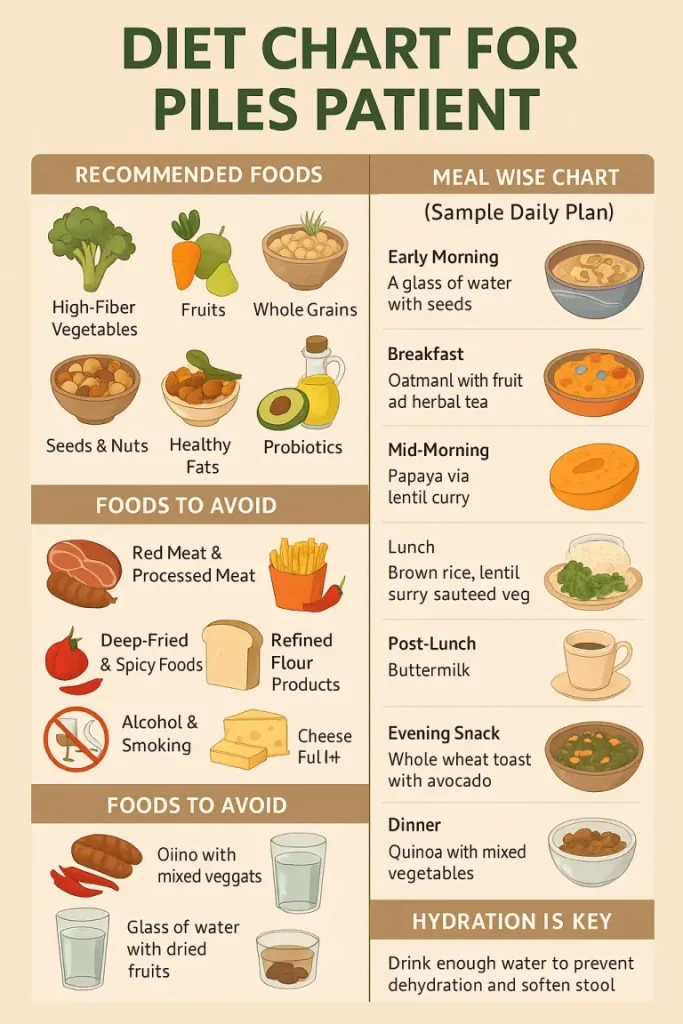
Sample Piles Diet Plan
Early Morning
- 1–2 glasses of warm water
- Soaked raisins or soaked chia seeds
Breakfast
- Oatmeal with fruits
- Whole wheat bread
- Papaya or banana
Mid-Morning Snack
- Apple or pear
- Plenty of water
Lunch
- Brown rice or whole wheat roti
- Lentils (dal)
- Mixed vegetables
- Salad (cucumber, carrot, tomato)
Evening Snack
- Fresh fruit
- Coconut water
Dinner
- Vegetable soup
- Whole wheat roti
- Cooked vegetables
- Small portion of lean protein
Before Bed
- A glass of water
- Optional fiber supplement if recommended by a doctor
Foods to Avoid with Piles
Certain foods can worsen constipation and irritation.
Avoid or Limit:
- Fast food
- Fried foods
- Processed snacks
- Excessively spicy foods
- Sugary beverages
- Excess red meat
- Refined flour products
Reducing these foods can improve recovery.
Additional Lifestyle Tips
Stay Active
Regular exercise helps improve digestion.
Good Activities:
- Walking
- Light jogging
- Yoga
- Stretching
Avoid Straining
Do not force bowel movements, as straining increases pressure on hemorrhoids.
Maintain Healthy Toilet Habits
- Go when you feel the urge
- Avoid long periods sitting on the toilet
- Keep bowel movements regular
Common Diet Mistakes to Avoid
- Drinking too little water
- Skipping meals
- Eating low-fiber foods
- Excessive consumption of spicy foods
- Relying only on medications without dietary changes
Diet and lifestyle modifications are key parts of successful piles treatment.
When Diet Alone Is Not Enough
A healthy diet can significantly improve mild piles symptoms, but some patients require medical treatment.
Seek Medical Advice If You Have:
- Persistent bleeding
- Severe pain
- Large swollen hemorrhoids
- Recurrent symptoms
- Difficulty sitting comfortably
Early treatment helps prevent complications.
Advanced Piles Treatment Options
If symptoms do not improve with diet and lifestyle changes, treatment options may include:
- Medication
- Rubber band ligation
- Injection therapy
- Infrared coagulation
- Laser piles treatment
- Surgery for severe cases
Dr. Faridul Islam provides personalized treatment plans based on individual needs.
Why Choose Dr. Faridul Islam?
Benefits of Care:
- Experienced piles specialist
- Personalized treatment plans
- Modern treatment options
- Focus on long-term recovery
- Comprehensive dietary guidance
Patients receive complete support from diagnosis through recovery.
Conclusion
A proper diet is one of the most effective ways to support piles treatment and prevent recurrence. High-fiber foods, adequate hydration, and healthy lifestyle habits can reduce constipation, improve bowel movements, and promote healing. Dr. Faridul Islam combines expert medical care with practical dietary guidance to help patients achieve lasting relief from piles. If you are experiencing piles symptoms, consult a specialist for a personalized treatment and nutrition plan tailored to your needs.